
Custom Poly Bags / Flip Top Poly Bags
Custom flip top poly bags for simple fold-over packaging workflows.
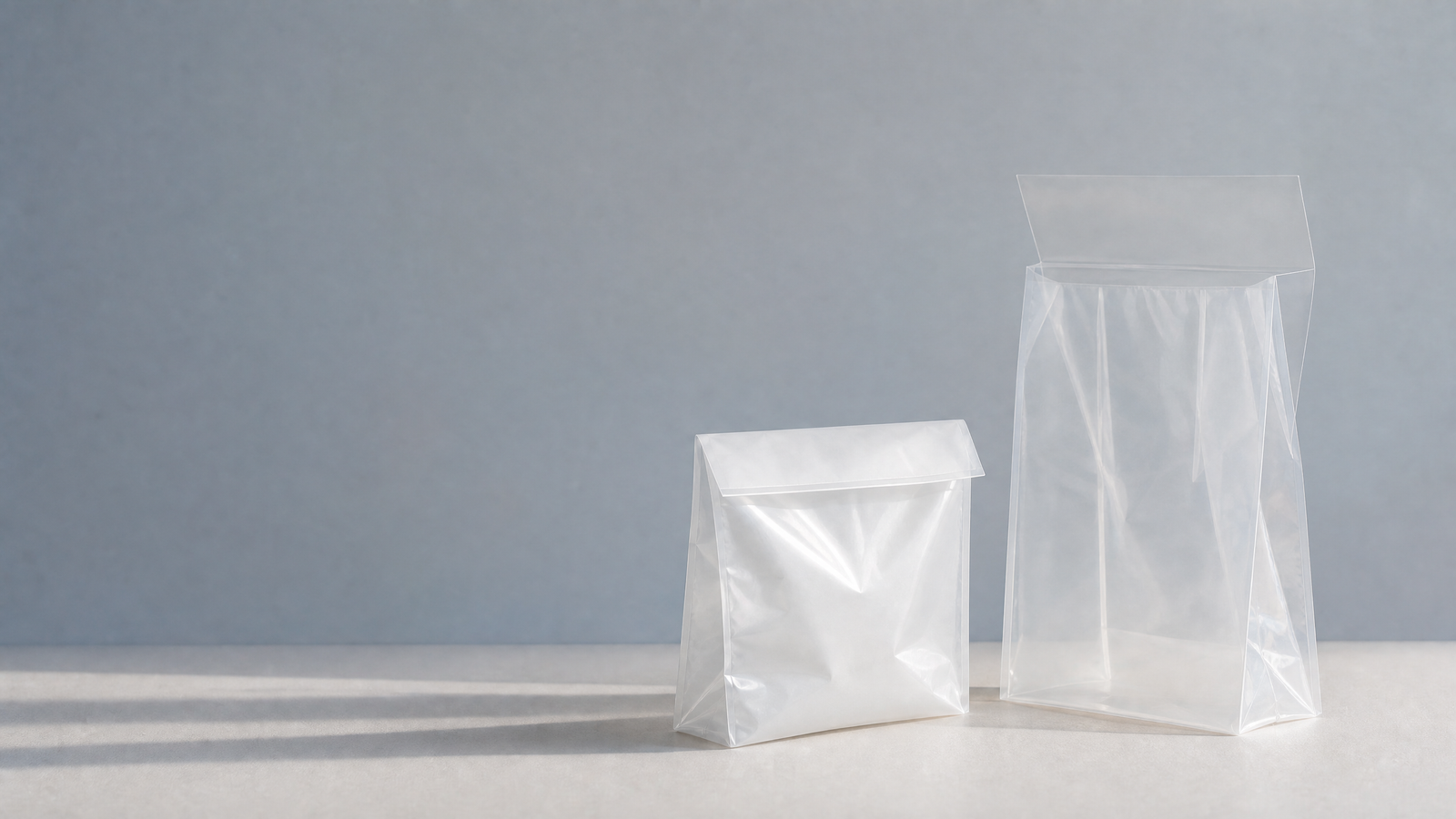
A flip top poly bag uses an extended flap that folds over the opening after the product is inserted. Start with the product’s packed proportions, the manual packing process, the amount of coverage you want to discuss and the desired product presentation.
Project inputs
The flap and the product should be specified as one package experience.
The best initial brief explains the product width, length and thickness, how it is loaded, how the folded flap will be used and what should remain visible. This makes it possible to discuss a format direction without assuming a particular closure, material or performance level.
Product proportions
Provide the product’s width, length, thickness and any shape detail that affects loading.
Packing movement
Describe how the item is inserted, folded, stored or prepared for distribution or retail.
Visibility & information
Explain what should remain visible and what brand or product information requires a place on the package.
Format context
A simple fold-over format can be useful when the packing workflow stays simple.
Apparel, textiles, printed materials, accessories and component sets are examples of project contexts in which a fold-over bag may be discussed. The relevant question is how the product is packed, seen and handled, rather than whether an industry-default configuration exists.
- Product width, length, thickness and a photo if available
- How the item is loaded and packed by hand or in a workflow
- The amount of fold-over coverage you want to discuss
- What product area should remain visible
- Artwork, instructions or identification requirements
- Market, estimated quantity and timing
Related directions
Compare the format or send the brief you have today.
Custom Poly Bags
Review the parent category of custom poly bag formats.
Parts Bags
Explore a component or kit-oriented direction.
Request a Quote
Send the product and packing-process brief.
Flip Top Poly Bag FAQ
Questions specific to custom flip top poly bags
What is a flip top poly bag?
It is a bag format with an extended flap that folds over the opening after the product is inserted.
How should I describe the flap requirement?
Share the product size and thickness, how it is loaded, the coverage you want to discuss and how the package will be handled after packing.
Is a flip top bag the same as a self-sealing bag?
The terms can describe different packaging approaches. Rather than assume a closure method, explain the handling and access needs in your project brief so the relevant configuration questions can be reviewed.
Can artwork be placed while the product remains visible?
Describe which product areas should remain visible and what information needs to be carried on the package. This gives the artwork and format discussion a clear starting point.
Buyer decision guide
Describe the fold-over step as part of the packing workflow.
The defining question for a flip-top bag is not only the product size, but how the product is inserted and how the extended flap is intended to cover the opening. This guide keeps those details together without assuming a particular closure method.
| Decision variable | Why it matters | Useful input |
|---|---|---|
| Product proportions | Width, length, thickness and shape determine the space that must be considered for insertion and coverage. | Packed product dimensions, a photo and any relevant product shape detail. |
| Loading method | A manual folding step can be described differently from a more repeated packing operation. | Who packs the item, approximate handling sequence and any existing reference. |
| Flap coverage | The desired coverage needs to be discussed with the product and the way the package is handled. | A sketch, reference bag or explanation of the intended fold-over appearance. |
| Visibility and information | Product visibility and printed information should be planned as a single presentation question. | Areas that should remain visible, plus artwork or text hierarchy. |
Three practical starting points
- 01 / Measure in the packed state.
Use the item as it will actually be inserted, rather than a flat product-only measurement. - 02 / Describe the hand movement.
A short note on loading and folding is enough to make the workflow relevant to the initial conversation. - 03 / State what must remain visible.
Clarify whether product view, instructions or brand identity takes priority in the package presentation.
If the project requires a different opening or closure experience, mention that directly in the brief. The useful outcome of the first conversation is to identify the format questions to explore, not to apply an assumed feature.